

close
Choose Your Site
Global
Social Media
Views: 0 Author: Site Editor Publish Time: 2026-08-31 Origin: Site


Inconsistent surface quality severely undermines manufacturing profitability in today's competitive market. Roughness, pitting, and poor lamination directly increase scrap rates. They delay production schedules and ultimately damage client trust. Perfecting a fluted profile is rarely simple. It requires precise synchronization between raw material formulation and mechanical extrusion processes. Even minor deviations create visible surface flaws on the final product. Wood-plastic composite (WPC) manufacturing demands strict environmental controls. It also requires highly stable mechanical parameters to ensure flawless aesthetics.
Fortunately, you can achieve consistent surface finishes easily. First, you must identify process bottlenecks early. Next, invest in capable extrusion technology. Modern equipment mitigates thermal and mechanical variations effortlessly. This proactive approach transforms unpredictable runs into reliable, high-yield operations. By understanding these core variables, you can optimize your production line. You will learn how specific extrusion mechanics dictate the final look and feel of your WPC panels.
Raw material moisture content and uneven plastification are the leading causes of surface defects like bubbles and rough edges.
High-precision vacuum calibration is non-negotiable for maintaining the sharp, rigid angles required in fluted and louvered designs.
Investing in an advanced WPC fluted panel machine with automated temperature and pressure controls reduces reliance on operator guesswork and lowers defect rates.
Downstream synchronization—specifically haul-off speed and online lamination tension—dictates the final aesthetic and durability of the panel.
Producing wood-plastic composites involves tight profit margins and demanding aesthetic standards. Manufacturers must define success criteria strictly. Moving beyond baseline extrusion means achieving defect-free, retail-ready panels directly off the line. Minor surface flaws render entire batches unsellable. You must eliminate defects before panels reach the packaging stage.
Extrusion lines often reveal symptoms of poor process control. Identifying these specific defects helps pinpoint mechanical or thermal imbalances quickly.
Shark Skin: A rough, ridged surface texture. It occurs when polymer melt fractures upon exiting the die.
Surface Blistering: Visible bubbles or pitting. They emerge when moisture or volatile gases remain trapped in the melt.
Color Streaking: Uneven pigment distribution. It results from inadequate mixing or improper shear rates inside the barrel.
Warping: Bending or twisting of the panel. It happens due to uneven cooling or excessive residual stress.
Surface defects introduce massive hidden costs. Material waste eats directly into your daily profitability. Regrinding rejected panels consumes extra energy and degrades polymer chains. Increased quality assurance (QA) rejection rates slow down production throughput. Furthermore, shipping defective panels risks expensive product returns. Client dissatisfaction often leads to lost future contracts. Protecting your brand reputation requires strict surface quality enforcement.
Many operators blame raw material formulations for poor aesthetics. However, troubleshooting surface quality requires a broader view. You must treat persistent defects as a systemic equipment failure. Adjusting raw materials only masks underlying mechanical issues. A poorly designed screw or an inefficient vacuum system will always produce inferior panels. You must evaluate your extrusion hardware critically. Upgrading machinery often resolves issues permanently.
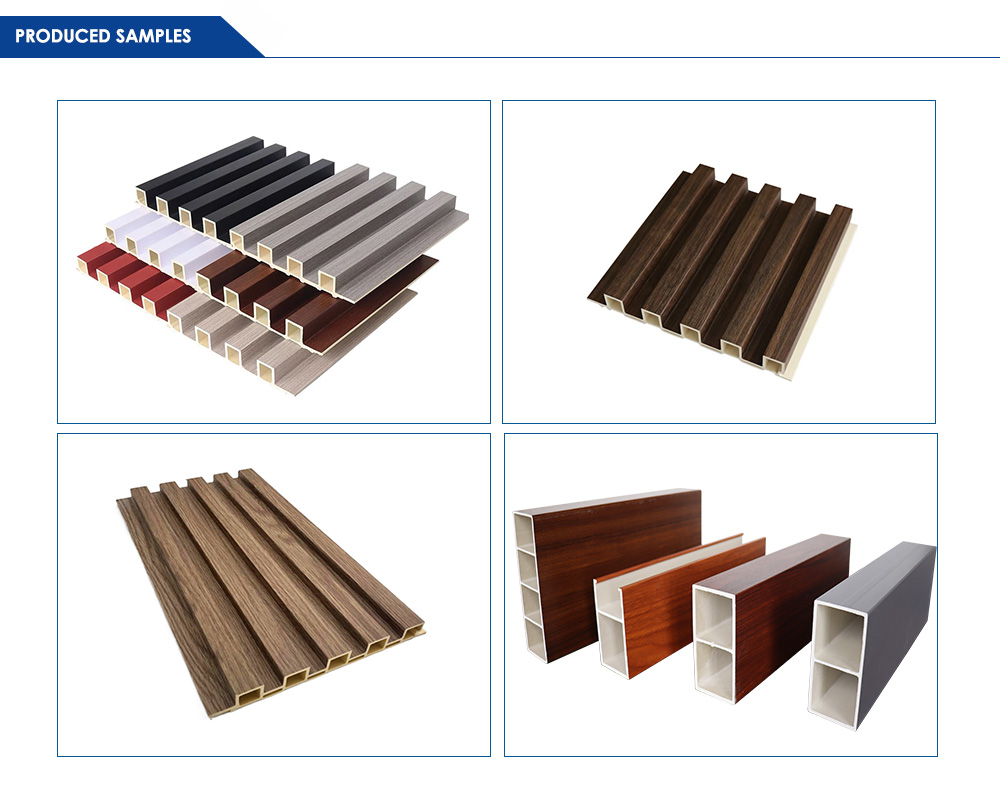
Extruding complex fluted shapes requires immense technical precision. Wood flour and PVC mixtures behave unpredictably under heat. Controlling fundamental extrusion variables prevents surface degradation.
Wood fibers absorb moisture rapidly. If this moisture enters the extruder, it turns into steam. Improper venting traps these gases inside the polymer melt. As the material exits the die head, the pressure drops. The trapped steam expands instantly. This reaction causes surface micro-bubbling and pitting. High-quality extruders feature robust vacuum degassing zones. They pull moisture and volatiles out of the barrel before the melt reaches the die.
Balancing heat and pressure determines the integrity of your panels. PVC degrades easily under excessive heat. Wood fibers burn when exposed to high shear friction. This degradation causes dark burn marks or brittle surfaces. Conversely, low temperatures result in poor plastification. Unmelted particles create a rough, grainy finish. You must maintain precise thermal windows. Consistent melt pressure ensures a steady flow rate, preventing surface pulsing.
The extrusion die shapes the hot polymer into a specific profile. The internal flow channel design is critical. It must distribute the material uniformly across complex fluted sections. Poorly designed channels cause flow imbalances. Faster flow in the center and slower flow at the edges create stress. This stress manifests as wavy surfaces or inconsistent wall thickness. High-polish, aerodynamically optimized die heads minimize friction and ensure a smooth surface finish.
The moment the melt exits the die, it enters the calibration table. Water temperature and vacuum pressure take over. They instantly freeze the panel's surface structure. Insufficient vacuum pressure fails to hold the plastic against the mold. This rounds off sharp fluted edges. Uneven cooling water distribution causes differential shrinkage. The panel will warp or bow as it cools. Precise calibration locks in structural rigidity and aesthetic perfection.
WPC Defect Troubleshooting Chart
Defect Type | Primary Root Cause | Mechanical Solution |
|---|---|---|
Micro-Bubbling | Trapped moisture/gases | Increase barrel vacuum degassing power. |
Shark Skin (Roughness) | Melt fracture at die exit | Adjust die temperature; reduce extrusion speed. |
Burn Marks | Polymer/wood degradation | Lower screw RPM; optimize multi-zone PID heating. |
Warping / Bowing | Uneven calibration cooling | Balance dual cooling circuits; regulate water flow. |
Achieving zero-defect production requires sophisticated hardware. Standard extruders struggle to process highly filled wood-plastic composites. Investing in a specialized WPC Fluted Panel Machine fundamentally changes your production capabilities.
Conical twin-screw extruders are superior for WPC plastification. Their overlapping screw geometry provides excellent shearing balance. They mix abrasive wood fibers and PVC resin evenly without generating excessive friction heat. This uniform mixing prevents color streaking and structural weak points. The conical design also builds high, stable extrusion pressure. Stable pressure prevents the pulsing that causes horizontal surface lines.
Thermal stability dictates surface smoothness. Modern machines utilize multi-zone Proportional-Integral-Derivative (PID) thermal regulation. PID controllers monitor barrel temperatures continuously. They adjust heating bands and cooling fans in real-time. This prevents polymer breakdown and wood fiber scorching. Precise heat control ensures the melt viscosity remains perfectly suited for complex profile extrusion.
The calibration phase finalizes the panel geometry. High-grade machines feature heavily upgraded vacuum tables. Look for independent pump controls. They allow operators to adjust vacuum strength across different sections of the mold. Dual cooling circuits manage water temperatures actively. They ensure sharp fluted edges and flawlessly smooth flat sections. These upgrades eliminate post-extrusion warping entirely.
Vibration is the enemy of smooth extrusion. Heavy motors and gearboxes generate intense kinetic energy. Older machines transfer these vibrations down the line. The calibration mold shakes slightly, transferring chatter marks onto the panel surface. Modern equipment isolates these vibrations. Heavy-duty frames and advanced gearbox damping mechanisms ensure a stable extrusion path. The result is a glass-smooth surface finish.
Pre-dry wood powder to keep moisture content strictly below 2%.
Clean vacuum degassing ports daily to prevent material clogs.
Inspect extrusion die heads for carbon buildup weekly.
Calibrate PID temperature sensors monthly for strict thermal accuracy.
Perfecting the extrusion phase solves only half the puzzle. Downstream processing handles the panel while it is still vulnerable. A dedicated wpc louver panel production line synchronizes every component perfectly.
The haul-off tractor pulls the panel through the calibration table. Its speed must match the extrusion output exactly. Fluctuations in haul-off speed cause severe issues. If the tractor pulls too fast, it stretches the panel, reducing wall thickness. If it pulls too slow, material backs up, causing surface bulges. Servo-driven motors provide precise speed synchronization. They maintain consistent surface tension, preventing microscopic stress fractures.
Cutting WPC panels generates highly abrasive dust. If this dust settles on the panel surface, it ruins subsequent laminations. Furthermore, aggressive saw blades cause edge chipping and surface scratching. Modern production lines utilize dust-free cutting technology. Vacuum extraction systems remove debris instantly. Precision pneumatic clamps hold the panel securely during the cut-to-length phase. This prevents vibration and ensures a factory-clean edge.
Many fluted panels require decorative PVC films. Applying these films inline saves time and labor. However, flawless film application demands strict environmental controls. The substrate temperature must remain consistent. Uneven cooling prevents the glue from activating properly. Uniform roller pressure is critical for pushing out trapped air bubbles. Tension control systems prevent the film from stretching or wrinkling. Integrating these systems directly into the production line guarantees a retail-ready aesthetic.
Procuring new equipment requires careful technical evaluation. You must look past superficial specifications. Focus on the engineering components that directly impact surface quality. Choosing the right wpc wall panel making machine secures your manufacturing future.
Compare equipment vendors based on core component durability. Wood fiber is incredibly abrasive. It wears down standard steel quickly. Focus on screw and barrel metallurgy. Bimetallic alloys offer superior wear resistance. Examine die head engineering closely. Vendors should provide computer-simulated flow analysis for their molds. Finally, check motor efficiency. High-torque AC motors provide stable power delivery without overheating.
Manual extrusion adjustments introduce human error. Reliable surface quality requires intelligent automation. Programmable Logic Controllers (PLCs) govern the entire line. Siemens or ABB PLC systems represent the industry standard. They offer intuitive touchscreen interfaces. More importantly, they provide comprehensive data-logging. Operators can save successful production recipes. This ensures repeatable surface quality across different shifts and batches.
Market trends shift rapidly. You might need to produce different fluted profiles in a single week. Assess the machine's changeover capabilities. Switching die heads and calibration molds should be straightforward. Quick-release mechanisms and modular water/vacuum connections save hours of downtime. A highly scalable machine reduces calibration-related waste. You can restart production quickly without scrapping hundreds of meters of flawed panels.
Do not finalize a purchase based on brochures alone. Request physical sample runs from the vendor. Analyze these samples for part tolerances, wall thickness consistency, and surface smoothness. Demand transparency regarding machine certifications. Verify CE or ISO compliance documents independently. Finally, evaluate their after-sales support. Reliable technical assistance is crucial when fine-tuning a new extrusion line.
Achieving flawless surface quality in WPC panel manufacturing is never an accident. It is meticulously engineered. Success demands precise control over temperature, pressure, and vacuum calibration. Overlooking any single variable guarantees increased scrap rates and diminished client trust.
To optimize your operations and maximize yield, implement the following steps:
Upgrade Degassing Systems: Ensure your extruder eliminates moisture effectively to prevent surface blistering.
Synchronize Downstream Equipment: Utilize servo-driven haul-off tractors to eliminate thickness variations and chatter marks.
Implement Smart Automation: Transition to PLC-controlled systems to standardize thermal recipes and remove operator guesswork.
Prioritize Metallurgy: Invest in wear-resistant screws and barrels to handle abrasive wood fibers long-term.
A highly capable extrusion line acts as your foundational defense against material waste. It prevents product rejections and solidifies your reputation in the market. Upgrading your equipment is a direct investment in long-term manufacturing profitability.
A: Bubbles typically form due to excessive moisture content in the wood powder. If the moisture exceeds 2%, it turns into steam during extrusion. Insufficient vacuum degassing in the extruder barrel traps this steam inside the polymer melt. As the panel exits the die, the trapped gas expands, creating visible surface blisters.
A: Extrusion speed directly impacts melt pressure and shear rates. Pushing the screw RPM too high generates excessive friction heat. This degrades the polymer and scorches the wood fibers. Excessive speed also causes melt fracture, commonly known as "shark skin," where the material tears slightly as it exits the die.
A: Yes, the die head dictates material flow. Poorly engineered flow channels cause uneven pressure, leading to wavy or warped surfaces. Upgrading to a high-polish, wear-resistant mold optimizes material distribution. It significantly reduces surface friction and guarantees sharp, consistent fluted edges.
A: Calibration water temperatures usually range between 15°C and 20°C. Maintaining a consistent temperature is critical. Rapid thermal shock from water that is too cold can cause immediate surface warping and internal stress fractures. The cooling process must be gradual and uniform across all panel surfaces.


