

close
Choose Your Site
Global
Social Media
Views: 0 Author: Site Editor Publish Time: 2025-09-27 Origin: Site


The twin screw extruder is a key tool in plastic processing. Among its various types, the co-rotating twin screw extruder is especially notable for its efficiency and versatility. This article explores its unique design, working principles, advantages, and applications. By the end, you'll gain a deeper understanding of its role in modern manufacturing processes.
A co-rotating twin screw extruder is a type of extrusion machine that uses two screws rotating in the same direction, meshing together within a barrel. This configuration enables the extruder to efficiently process materials, particularly polymers, by providing continuous mixing, conveying, and plasticization. The twin screw extruder design ensures that materials are evenly distributed, enhancing product quality and production efficiency.
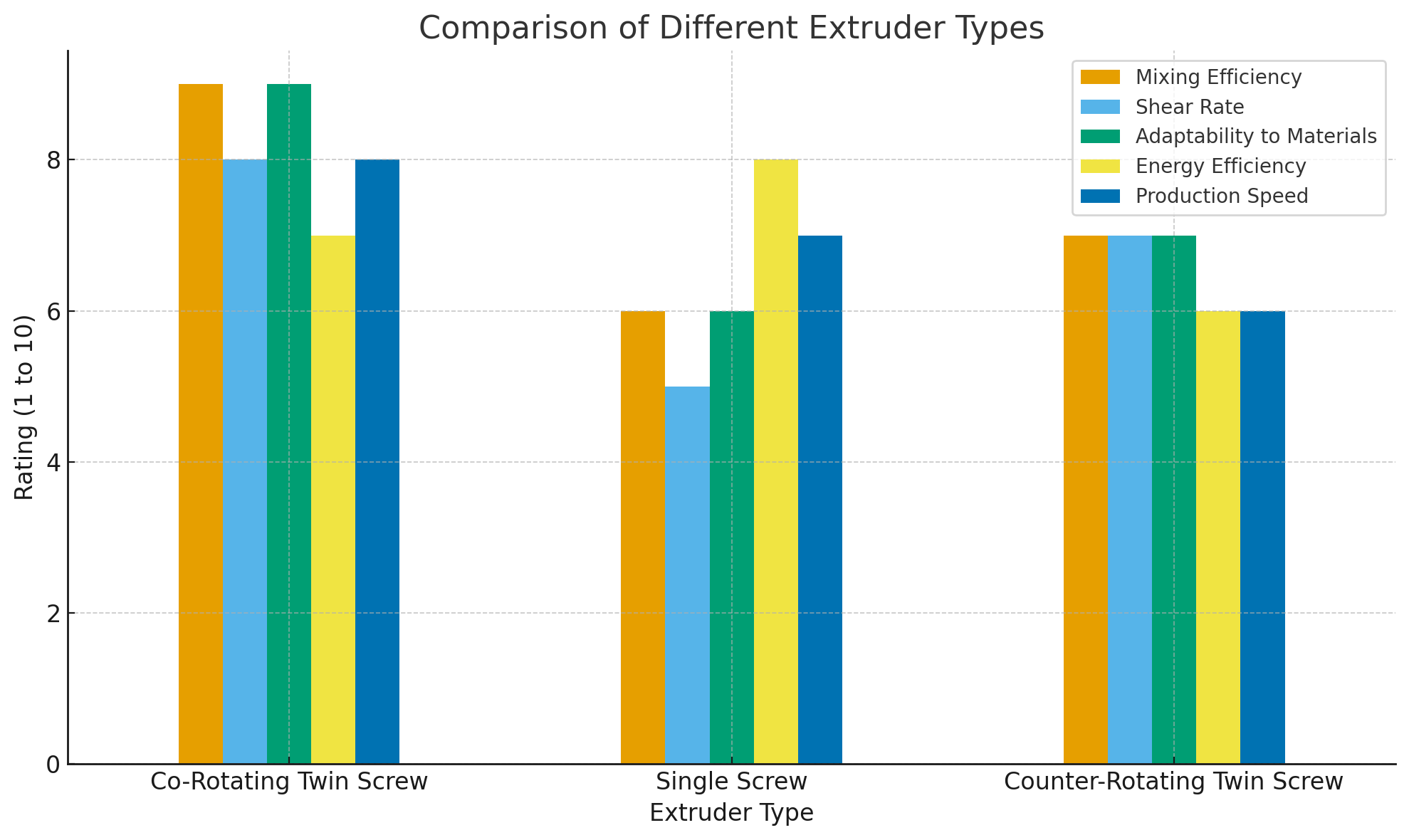
Unlike single screw extruders or counter-rotating twin screw extruders, co-rotating twin screw extruders have screws that rotate in the same direction. This difference in screw movement offers better material dispersion and reduced energy consumption. While counter-rotating extruders have screws turning in opposite directions, co-rotating designs achieve more uniform mixing, making them ideal for applications where precise material processing is crucial.
Key features of the co-rotating twin screw extruder include:
● Self-wiping design: The intermeshing screws continuously clean each other, preventing material build-up and ensuring efficient processing.
● Modular design: The machine can be customized with different screw geometries and barrel configurations to suit various material properties and production requirements.
● High shear rates: The co-rotating screws generate high shear forces that promote better mixing and plasticization of materials, improving the overall quality of the final product.
The feeding mechanism begins with raw materials entering the extruder’s hopper. These materials are then conveyed towards the screws, where they are compressed as the screws move them through the barrel. The compression section of the machine gradually decreases the gap between the two screws, increasing pressure and causing the materials to melt under heat.
As the screws rotate in the same direction, they exert shear forces on the materials. The shear rate created by the screw geometry helps to melt and homogenize the materials, preparing them for extrusion. This continuous shearing process ensures uniform material consistency and enhances the plasticizing effect.
The molten materials are forced through the die head, where they take on the desired shape, such as pipes, sheets, or films. The design of the die head plays a critical role in determining the final shape and size of the extruded product. Whether producing thin films or thick sheets, the co-rotating twin screw extruder can adapt to various molding requirements.
One of the significant advantages of co-rotating twin screw extruders is their self-cleaning capability. The meshing screws clean each other as they rotate, which prevents the accumulation of residual material. This feature reduces downtime, lowers the risk of contamination, and improves the overall efficiency of the extrusion process.
The primary components of a co-rotating twin screw extruder include the barrel, screws, and head connector. The barrel serves as the housing where the screws rotate, while the screw elements, often made of modular disks, are designed to convey, mix, and melt the material efficiently.
The feeding system includes the hopper and feeder, which supply the material to the screws. The transmission system, consisting of a motor, reduction box, and thrust bearings, powers the screws, enabling them to rotate and process the material. This combination of components ensures continuous material feeding and uniform extrusion.
Temperature control is critical in extrusion processes, which is why co-rotating twin screw extruders are equipped with heating and cooling systems. These systems maintain the necessary temperature throughout the process, ensuring optimal material flow and preventing overheating or degradation of sensitive materials.
The control system monitors key parameters such as screw speed, pressure, and temperature to ensure optimal extrusion conditions. Modern co-rotating twin screw extruders often feature automated control systems that adjust these parameters in real-time, improving product consistency and reducing energy consumption.
Co-rotating twin screw extruders are widely used in the automotive and aerospace industries for producing various plastic parts, such as dashboards, trims, and insulation materials. The high precision and efficiency of these extruders help manufacturers meet the demanding specifications required in these sectors.
In the medical device industry, co-rotating twin screw extruders are essential for producing medical-grade components like catheters, implants, and drug delivery systems. The precise control over material properties ensures that these components meet stringent safety and performance standards.
The construction industry benefits from co-rotating twin screw extruders for manufacturing plastic pipes, profiles, and sheets. These extruders provide consistent material properties, which are critical for producing durable and high-quality building materials.
Co-rotating twin screw extruders are the preferred choice for compounding and polymer processing. They can effectively process engineering plastics and create composite materials, which are used in industries such as electronics, packaging, and consumer goods.
In the food and pharmaceutical industries, co-rotating twin screw extruders are used for producing snacks, extruded cereals, and biodegradable materials. Their ability to handle a variety of materials and maintain consistency makes them an essential tool for these sectors.
The co-rotating design ensures that materials are thoroughly mixed and dispersed. This results in a more homogeneous product, whether for plastic processing or other applications. The continuous flow between the intermeshing screws allows for superior material uniformity.
The shear forces generated by the rotating screws enhance the plasticization of materials, improving their flow and moldability. This high shear effect is particularly beneficial when processing high-viscosity materials or producing complex polymer blends.
One of the major benefits of co-rotating twin screw extruders is their modular design. This flexibility allows for easy customization, enabling manufacturers to adapt the extruder to a wide range of materials and processing requirements. Whether dealing with polymers, compounds, or blends, these machines can be adjusted to optimize performance.
Co-rotating twin screw extruders offer superior control over the extrusion process, ensuring that each batch meets the desired specifications. The consistency in product quality helps manufacturers achieve high output with minimal variation in material properties.
The primary difference between co-rotating and counter-rotating twin screw extruders lies in the direction of the screws’ rotation. In a co-rotating extruder, both screws rotate in the same direction, enhancing material distribution. In contrast, counter-rotating extruders feature screws that turn in opposite directions, which creates a more intense shear force but can result in higher energy consumption.
Co-rotating extruders are known for their uniform mixing and plasticization capabilities, whereas counter-rotating extruders excel in processing more complex materials or highly viscous substances. The choice between the two depends on the specific requirements of the application, such as material properties and energy efficiency.
When deciding between a co-rotating and counter-rotating twin screw extruder, it’s crucial to consider factors like material viscosity, desired shear rate, and energy efficiency. Co-rotating extruders are ideal for precise mixing and high output, while counter-rotating extruders are better suited for more demanding materials.
Intermeshing co-rotating twin screw extruders are designed to ensure high material conveying efficiency and strong mixing capabilities. These extruders are often used in polymer and composite processing, where uniformity and speed are essential.
The conical design of these extruders reduces wear on the screws and enhances the mixing efficiency. They are typically used in applications requiring high mixing and low shear rates, such as in the food industry.
Parallel co-rotating twin screw extruders offer excellent energy efficiency and high production capacity. These are commonly used in industries that require high-volume processing, such as packaging and the manufacture of plastic pipes.
Co-rotating twin screw extruders are crucial in various industries, such as automotive and medical device manufacturing. Their unique design ensures high mixing efficiency and adaptability, making them ideal for processing diverse materials. When choosing the right extruder, assess your application needs to determine if a co-rotating or counter-rotating design is best suited.
The PVC Window Profile Machine - Eans Machinery from Eans Machinery offers exceptional performance and versatility, ensuring optimal results in material processing. Their products are designed to provide high efficiency and flexibility, helping companies meet specific production demands.
A: A co-rotating twin screw extruder is a machine that uses two screws rotating in the same direction to efficiently process materials. This design improves mixing, conveying, and plasticization, making it ideal for various industries.
A: Unlike a single screw extruder, which uses one screw, a co-rotating twin screw extruder uses two screws rotating in the same direction. This offers better material mixing and processing efficiency.
A: Co-rotating twin screw extruders provide superior mixing, higher shear rates, and adaptability to different materials, making them ideal for diverse applications such as automotive and medical device production.
A: Co-rotating twin screw extruders are perfect for processes requiring high mixing efficiency and uniform material distribution. They are especially effective for producing high-quality products in complex manufacturing environments.
A: The cost of a co-rotating twin screw extruder varies depending on the model and specifications. However, they offer high efficiency, which can lead to long-term savings by reducing energy consumption and improving production.
A: Regular cleaning and monitoring of components like screws, bearings, and the control system are essential for maintaining optimal performance. Ensuring proper lubrication and checking for wear on the screws can extend the machine's life.
A: Co-rotating twin screw extruders are highly versatile and can process a wide range of materials, from polymers to composites. However, the specific configuration may vary depending on the material type and application.


